Furnace repair in Gunlock, UT
Connect with a local provider for heating system concerns in Gunlock.
Furnace Repair
TownGunlock, UT
CountyWashington
ZIP84733
Heating systems in Gunlock’s rural homes
Gunlock has rural homes that range from older, simple residences to newer houses on larger parcels, and furnace repair needs can vary with the equipment installed. The community lies northwest of St. George near Gunlock Reservoir. Open lots, changing grades, and a desert climate shape access to mechanical spaces and exterior components.
Summer heat and indoor moisture
Very hot summers place demand on shared heating and cooling equipment. Moisture from cooling operation can affect condensate drains, while dust can accumulate on filters and blower components.
Basements, crawl spaces, and attics
Heating equipment or ducts may be located in an attic, crawl space, closet, or basement area. Access, insulation, and clear working space affect what the provider can inspect.
Water and drainage
Gunlock Reservoir and seasonal runoff make site drainage worth considering around homes on sloped parcels. Water should not collect around exterior equipment, electrical disconnects, or venting components.
Power and storms
Wind or storm conditions can coincide with power interruptions or electrical issues. A provider can distinguish a system fault from a power-supply concern after the home’s electrical service is restored.
Furnace repair checks for Gunlock properties
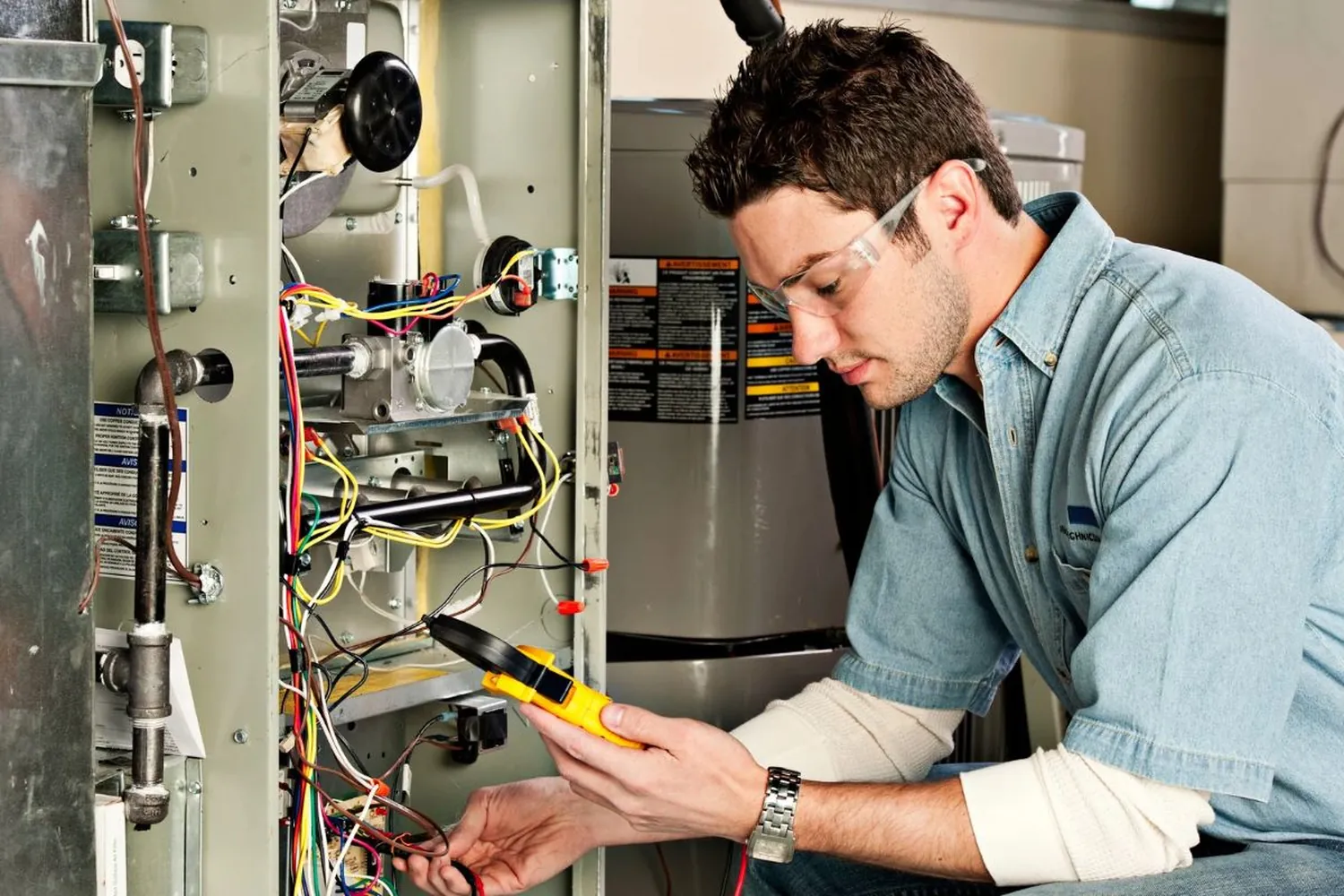
A forced air furnace uses a thermostat, blower, filter, controls, and duct system to move heated air through a home. Gas furnace repair may include inspection of the natural gas line connection, burner assembly, ignition sequence, and venting. Electric furnace repair follows a different diagnostic path involving electrical heating components and controls.
Furnace troubleshooting begins with the reported symptom, such as no heat, repeated cycling, a blower that will not start, or a unit that shuts down. A high efficiency furnace or condensing furnace has condensate and venting components that differ from older non-condensing equipment. The technician can test accessible parts and explain the observed condition.
Furnace maintenance and repair can include filter checks, cleaning where appropriate, safety-control inspection, and confirmation of operating sequence. Heating system maintenance and an annual furnace inspection can help identify accessible wear before the colder season. A provider can also discuss AFUE rating information when a homeowner is evaluating an aging unit.
Furnace repair work in Gunlock
| Part | What it does | Signs it is failing |
|---|---|---|
| Thermostat | Signals the furnace to start and stop heating. | Incorrect temperature readings, no call for heat, or frequent cycling. |
| Air filter | Catches airborne dust before air moves through the furnace. | Weak airflow, a dirty filter surface, or frequent limit switch shutdowns. |
| Ignition system | Lights the burners during the heating cycle. | The furnace clicks or starts but does not produce heat. |
| Blower motor | Moves heated air through the ductwork. | Little airflow, unusual motor noise, or a blower that will not run. |
| Flame sensor | Confirms that burners have lit safely. | Burners light briefly and then shut off. |
Desert conditions and heating equipment
Gunlock’s summer heat can leave dust on outdoor equipment and increase cooling-season runtime on combined systems. Winter nights are cooler, so heating faults may first appear during a cold spell. Storm runoff needs a path away from equipment locations. Seasonal checks can focus on filters, drains, venting, and electrical connections that are accessible to the provider.
Where we work in Gunlock
Also nearby: Veyo, Enterprise, Santa Clara, Ivins, St. George.
Central Gunlock
Homes near the center of the community can have rural-lot access and varied equipment locations.
Gunlock Reservoir area
Properties nearer the reservoir may need attention to drainage and site access after runoff.
Gunlock Road corridor
Homes along Gunlock Road may have equipment in attics, closets, or detached utility areas.
North Gunlock
Open northern parcels can be exposed to wind and weather.
Gunlock furnace questions
What can a burning smell or new noise from a Gunlock forced-air furnace indicate?
A smell or noise can come from several sources, including dust at startup, a blower issue, ignition components, or an electrical problem. If there is a gas odor, smoke, or suspected carbon monoxide concern, leave the area and contact the appropriate utility or emergency authority. A provider can inspect the equipment after it is safe to do so.
Why might rooms in a Gunlock home near Gunlock Reservoir heat unevenly or have poor airflow?
Filter restriction, duct leakage, closed registers, blower problems, insulation gaps, and thermostat location can contribute. The technician can inspect accessible airflow components and identify what may be affecting the system.
What can I check before requesting help for a Gunlock heating problem?
Confirm the thermostat is set to heat, check the filter, and look for a tripped breaker without repeatedly resetting it. Check that accessible outdoor equipment is clear of debris. Do not open sealed gas or electrical components.
Who handles permits or inspections for heating work at a Gunlock property?
Requirements depend on the scope of work and the authority having jurisdiction. Ask the independent provider whether a permit or inspection applies to the proposed work and who will handle it.
How should I prepare for a visit when my Gunlock home has a tight crawl space, attic access, or steep driveway?
Tell the referral coordinator and provider about access limits when scheduling. Clear a path to the thermostat, equipment, filter location, and relevant electrical panel when it is safe to do so.
Need furnace repair in Gunlock?
Tell us your town and what is happening.