Furnace repair in Sandy, UT
Connect with a local provider for furnace repair in Sandy.
Furnace Repair
TownSandy, UT
CountySalt Lake
ZIP84070, 84092, 84093, 84094
Heating service for Sandy homes from valley floor to east-bench areas
Sandy sits along major Wasatch Front routes, with Interstate 15, State Street, 9000 South, and 9400 South linking it to Salt Lake County communities. The city extends from flatter western neighborhoods toward the foothills east of State Street. Housing ranges from mid-century homes to newer subdivisions, townhomes, and larger properties closer to the east bench. That range creates different furnace locations, duct layouts, and winter exposure conditions.
Housing age and building styles
Sandy has established ranch-style and split-level homes alongside later subdivisions and attached housing. Older ductwork, additions, finished basements, and newer high-efficiency systems can all change what a provider checks.
Lot slopes and outdoor equipment placement
East-side lots may slope toward the Wasatch foothills, while western areas are generally flatter. Grade, snow storage, drainage, and clearance around outdoor heat-pump equipment or vent terminations can affect operation.
Trees, leaves, and pollen
Mature landscaping is common in many Sandy neighborhoods. Leaves, cottonwood material, and pollen can collect around outdoor equipment and return-air areas, so accessible components may need seasonal attention.
Winter storms and snow
Winter storms can leave snow around sidewall vents, roof terminations, and exterior equipment. Clearances should be maintained according to the equipment requirements, without blocking or modifying vents.
Furnace repair service for Sandy heating equipment
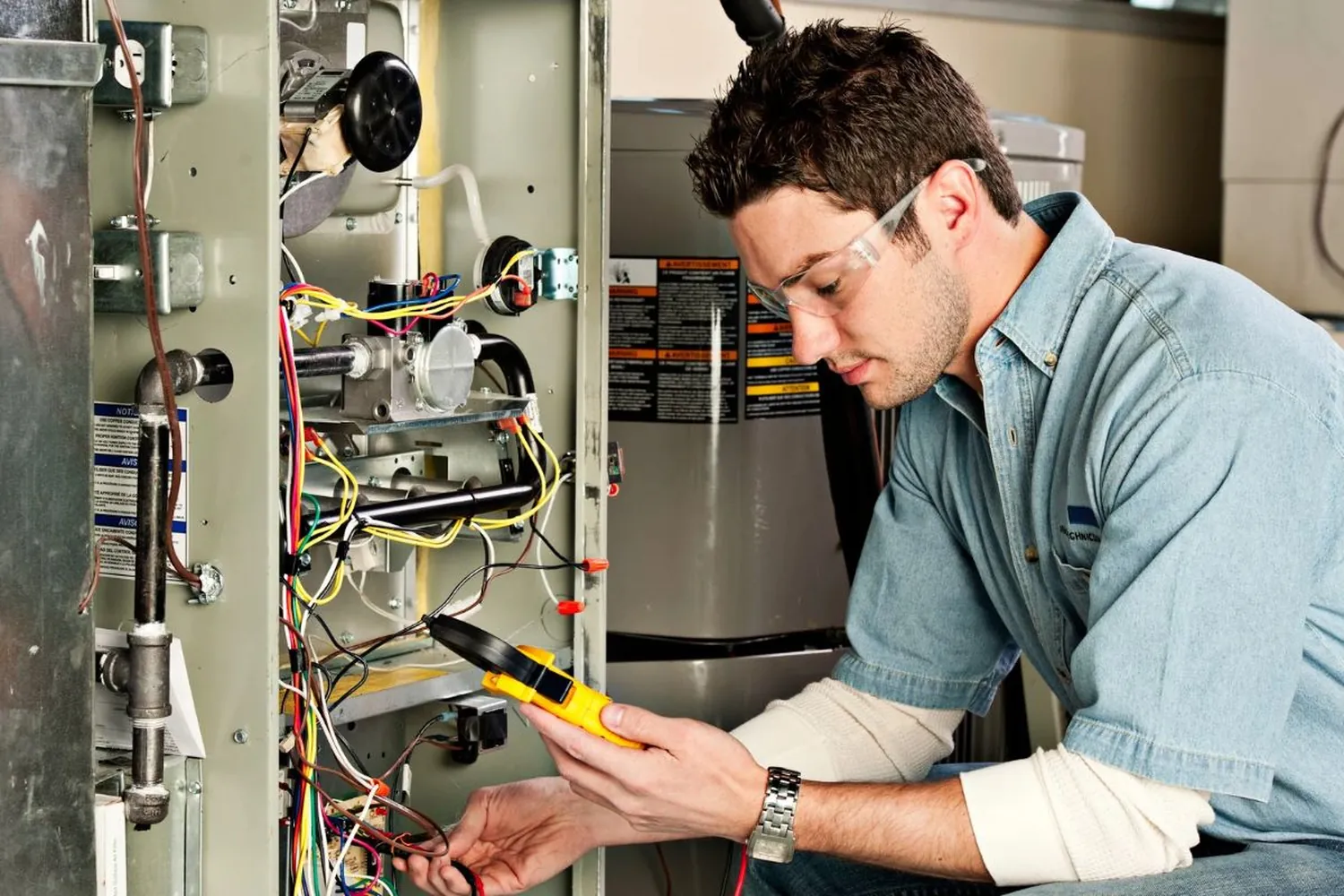
For furnace repair service, we connect Sandy callers with independent providers who diagnose residential heating equipment. The technician first confirms the thermostat call, electrical power, and the system's operating sequence. They may then inspect the furnace cabinet, accessible wiring, air movement, and diagnostic information before recommending a next step.
A furnace technician working on a condensing furnace may inspect the natural gas line connection, burner assembly, condensate arrangement, inducer motor, flame sensor, and igniter. On older equipment, the pilot light may be relevant, while many newer units use electronic ignition. If the system starts but does not deliver heat, the provider may test controls and safety devices rather than simply trying to fix furnace symptoms at the thermostat.
A furnace repair company in the referral network can also address blower-related comfort issues. The blower motor and blower wheel affect circulation through ductwork, while a damaged or restricted heat exchanger is a separate safety-related concern requiring professional assessment. Furnace service should include a clear explanation of findings, available repair options, and any limits created by equipment age or part availability.
Furnace repair work in Sandy
| Part | What it does | Signs it is failing |
|---|---|---|
| Thermostat | Signals the furnace to start and stop heating. | Incorrect temperature readings, no call for heat, or frequent cycling. |
| Air filter | Catches airborne dust before air moves through the furnace. | Weak airflow, a dirty filter surface, or frequent limit switch shutdowns. |
| Ignition system | Lights the burners during the heating cycle. | The furnace clicks or starts but does not produce heat. |
| Blower motor | Moves heated air through the ductwork. | Little airflow, unusual motor noise, or a blower that will not run. |
| Flame sensor | Confirms that burners have lit safely. | Burners light briefly and then shut off. |
Sandy winters, inversions, and seasonal system use
Sandy receives cold winter weather, and foothill-adjacent areas can experience different snow and wind conditions than lower-elevation neighborhoods. During winter inversions, residents may keep homes closed for longer periods, making filter condition and airflow especially noticeable. Spring pollen and autumn leaves can affect accessible intake and outdoor equipment areas. Seasonal inspection before sustained winter operation allows a provider to identify issues when the system can be tested under a heating call.
Where we work in Sandy
Also nearby: Draper, Midvale, South Jordan, Cottonwood Heights, Alta.
Historic Sandy
Older homes in Historic Sandy may have remodeled basements, original sections, and later additions served by changed ductwork.
Crescent
Crescent includes established residential areas where furnace age and return-air design vary by property.
Willow Creek
Willow Creek homes often have mature trees and landscaping that can affect seasonal exterior equipment clearance.
Falcon Park
Falcon Park-area homes include later residential development with a mix of equipment ages and layouts.
Granite
Granite's east-bench setting can bring sloped lots and greater exposure to foothill weather.
Sandy furnace questions
After a Rocky Mountain Power outage during a Sandy snowstorm, why might a furnace not restart?
The thermostat may need a new call for heat, a breaker could be tripped, or the furnace may have stopped on a safety control during the interruption. A provider can check the power supply, ignition sequence, and error information if the system does not resume normal operation.
What can rising heating bills in a Sandy home near the east bench indicate?
Higher use can result from cold weather, thermostat changes, air leakage, a dirty filter, duct losses, or declining furnace performance. A provider can evaluate the equipment and accessible airflow conditions, then explain what is measurable and what may involve the building envelope.
When is routine maintenance most useful for Sandy's climate?
Many homeowners schedule a heating check before regular cold-weather operation begins in fall. This gives the provider an opportunity to test ignition, safeties, blower operation, and venting before winter storms increase demand.
What happens step by step during a furnace visit at a Sandy townhouse?
The provider normally begins with your description of the issue and confirms thermostat settings and power. They inspect the equipment, run diagnostic checks, evaluate relevant components and accessible airflow, then explain findings before any repair is authorized.
How long do Sandy furnace parts and repairs usually take?
Repair length depends on the diagnosis, equipment model, access, and whether the required part is available. The provider who inspects the unit can give the most accurate estimate after identifying the failed component and confirming part information.
Need furnace repair in Sandy?
Tell us your town and what is happening.