Furnace repair in Logan, UT
Get connected with a local provider for Logan heating system concerns.
Furnace Repair
TownLogan, UT
CountyCache
ZIP84321, 84322, 84323, 84335, 84341
Heating equipment in Logan's growing street grid
Logan grew from an agricultural settlement into Cache Valley's county seat and a university city with established neighborhoods, apartment areas, and outward residential growth. Its broad street grid extends from older central blocks toward newer development on the edges of the city. Utah State University influences housing demand on the east side, while many commuters use Main Street, 100 West, and U.S. Route 89. That mix gives providers a wide range of furnace locations and building layouts to assess.
Commuter roads and city layout
Traffic routes such as Main Street and U.S. Route 89 shape how people move through Logan, especially at busy times of day. When arranging a visit, provide the address, parking details, and any access instructions so the independent provider can plan for the property.
Renovations and additions
Older Logan houses are often renovated or expanded over time. A new room or finished basement can change heating loads and airflow needs, particularly if the original forced-air system was not modified with the addition.
Apartments and rental buildings
Logan has apartments, duplexes, and rental houses as well as detached homes. Equipment may be in a common mechanical room, an individual closet, or a basement, and access may need to be coordinated with an owner or property manager.
Elevation, wind, and exposure
Logan's Cache Valley setting brings cold winters, and exposed sites can feel windier than sheltered blocks. Wind and cold can reveal gaps in weather sealing and increase the workload on a heating system.
Furnace service for Logan homes, rentals, and additions
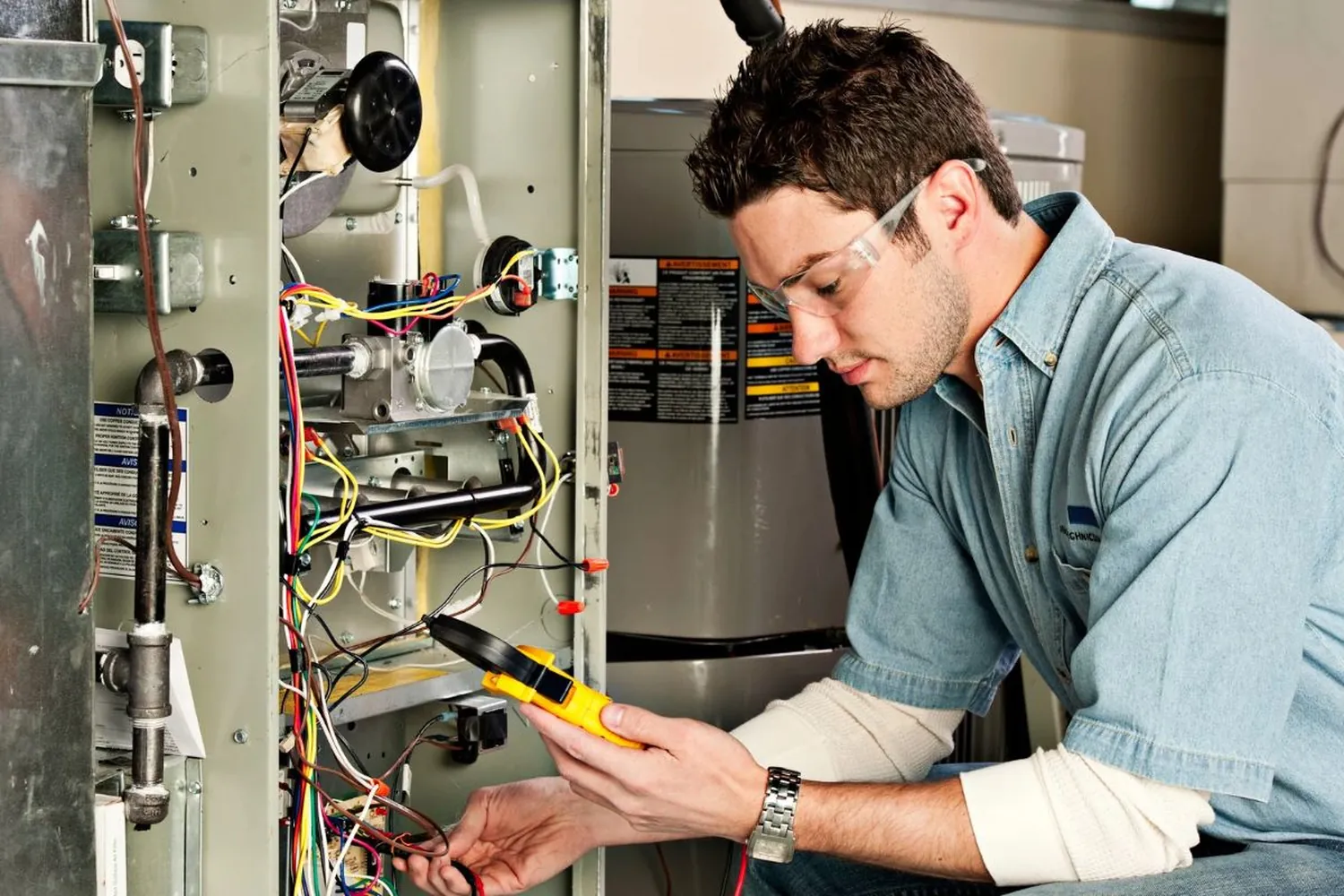
Furnace repair in Logan begins with the equipment type and the symptom. Many homes use a forced air furnace with a thermostat, return ducts, supply registers, and a blower moving conditioned air through the house. A furnace technician can check the call for heat, electrical power, ignition sequence, filter condition, and visible ductwork concerns.
A furnace repair company may find that a blocked filter, disconnected duct, dirty blower, worn motor component, or control issue is contributing to poor performance. Furnace filter replacement can improve airflow when the existing filter is dirty, but it does not correct every problem. The provider can separate a routine maintenance item from a part failure or a system-sizing concern in a remodeled house.
Furnace maintenance and repair may include a furnace tune-up, inspection of burners and venting, and heating system maintenance appropriate to the installed unit. An annual furnace inspection is a practical time to ask about combustion safety, carbon monoxide alarms, and the equipment's AFUE rating. Furnace service should be based on the unit's condition and the manufacturer's requirements, not on assumptions about a particular property.
Furnace repair work in Logan
| Part | What it does | Signs it is failing |
|---|---|---|
| Thermostat | Signals the furnace to start and stop heating. | Incorrect temperature readings, no call for heat, or frequent cycling. |
| Air filter | Catches airborne dust before air moves through the furnace. | Weak airflow, a dirty filter surface, or frequent limit switch shutdowns. |
| Ignition system | Lights the burners during the heating cycle. | The furnace clicks or starts but does not produce heat. |
| Blower motor | Moves heated air through the ductwork. | Little airflow, unusual motor noise, or a blower that will not run. |
| Flame sensor | Confirms that burners have lit safely. | Burners light briefly and then shut off. |
Cache Valley winter exposure
Cold Logan winters can mean long heating cycles, especially in homes with north-facing exposure or rooms over garages. Wind can make drafts and uneven room temperatures more noticeable. During snow season, exterior combustion-air or vent terminations on compatible systems should remain clear according to the equipment instructions. A provider can inspect furnace operation, while insulation, windows, and building-envelope issues may need separate evaluation.
Where we work in Logan
Also nearby: North Logan, Providence, River Heights, Smithfield, Nibley, Hyde Park.
Downtown Logan
Older central-city homes may have renovated basements, additions, and ductwork adapted through several remodeling projects.
Adams neighborhood
Homes near the Adams area can include established housing where room-by-room comfort depends on return-air paths and duct condition.
Wilson neighborhood
The Wilson area includes residential blocks where equipment access may be through basements, closets, or attached garages.
Hillcrest neighborhood
East-side elevation and exposure in Hillcrest can make air sealing and balanced heating particularly relevant.
Utah State University area
Housing near campus includes rentals and multi-family properties where access coordination can be important.
Logan furnace questions
What might a burning smell or new noise from a forced-air furnace in a downtown Logan home indicate?
A brief dusty smell can occur when a system first runs after a long off-season, but persistent burning odor, electrical odor, banging, squealing, or grinding needs assessment. Noises can come from the blower, motor, ducts, or combustion components. Turn the unit off if there is smoke, a strong gas odor, or a carbon monoxide alarm, then contact the utility or emergency services as appropriate.
Why can a room over a garage or an east-side Hillcrest room in Logan stay cold when other rooms feel normal?
Uneven comfort can result from restricted airflow, undersized or disconnected ducts, closed registers, poor return-air paths, insulation gaps, or building exposure. A technician can assess the furnace's operation and visible duct conditions. The cause may involve both the heating equipment and the structure.
Before calling about a furnace issue at a Logan rental or house, what can I check safely?
Check that the thermostat is set to heat and has a reasonable temperature setting, verify the breaker has not tripped, and look at the filter if it can be changed safely. Do not bypass safety switches or open sealed combustion areas. An outdoor unit is not part of every furnace system, but if your home has a heat pump, keep its area free of loose debris and report any visible issue to the provider.
How do permits or inspections apply when replacing heating equipment in a Logan addition?
Permit and inspection requirements can depend on the scope of work and the property. Ask the provider what permits may apply and confirm current requirements with Logan City Building and Inspection Services. The provider should explain the work proposed and any inspection steps connected to it.
How should a Logan homeowner prepare for a furnace visit when the unit is in a tight basement or attic?
Clear a safe path to the furnace and make sure the technician can reach the thermostat, electrical panel if relevant, and access hatch. Tell the referral coordinator about low ceilings, crawl-space entries, steep driveways, pets, gates, or limited street parking. Those details help the provider understand the access conditions before arriving.
Need furnace repair in Logan?
Tell us your town and what is happening.