Furnace repair in Huntington, UT
Connect with local heating providers serving homes in Huntington.
Furnace Repair
TownHuntington, UT
CountyEmery
ZIP84528
Furnace repair for Huntington’s cold and changeable seasons
Furnace repair in Huntington becomes especially important during the cold, changeable weather that reaches this Emery County community. Huntington sits in Castle Valley near Huntington Creek, with homes extending from the town center toward canyon and open-valley areas. The housing mix includes established detached homes, properties with larger lots, and homes that have been updated over time. We connect callers with independent local providers who inspect and perform the work themselves.
Established homes and home styles
Older Huntington houses can have original supply trunks, later room additions, and equipment located in basements, closets, or utility rooms. A provider can evaluate the furnace and the air-delivery system together when a renovated room remains colder than the rest of the house.
Lots, slopes, and exterior components
Properties approaching Huntington Canyon or the town’s edges can have grades, driveways, and outbuildings that affect equipment access. The location of exterior vents, gas meters, and any outdoor HVAC components should remain accessible for inspection.
Trees, pollen, and local dust
Trees, pollen, and dry-season dust can load filters and collect around exterior equipment. A restricted filter can reduce airflow and contribute to overheating or limit-switch shutdowns.
Storms and snow
Winter storms can bring snow around intake and exhaust terminations on applicable equipment. After a storm, exterior openings should be checked visually and kept clear without damaging the vent components.
How home furnace repair is diagnosed in Huntington
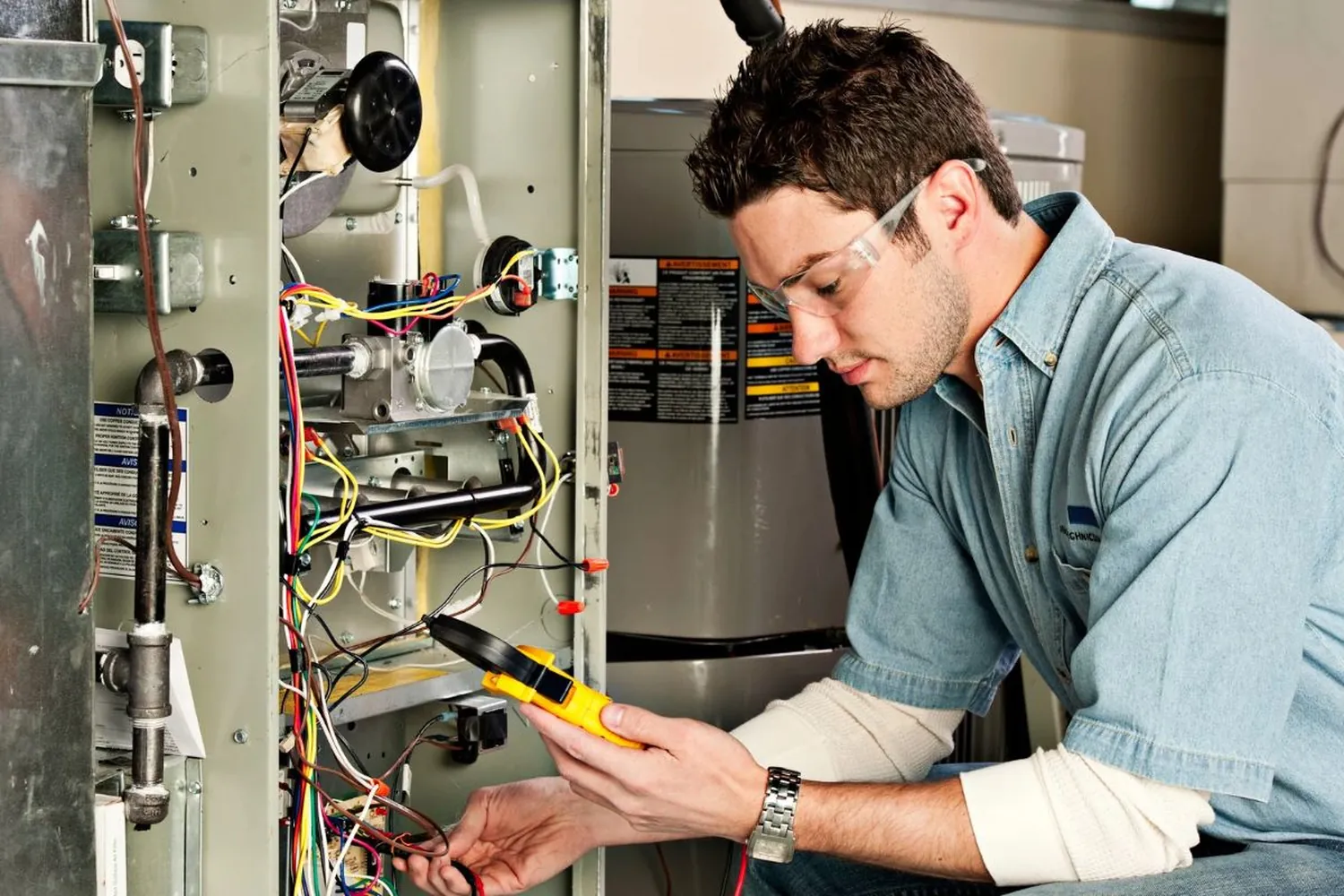
Home furnace repair begins with the symptom the homeowner noticed: a furnace not working, cool air from registers, repeated cycling, or unusual sounds. The provider may check the thermostat, power, filter, and the system’s startup sequence. Clear information about when the problem began can help narrow the diagnosis.
On fuel-burning equipment, the technician can inspect the natural gas line connection, burner assembly, igniter, flame sensor, pilot light where applicable, and heat exchanger. A failed igniter or dirty flame sensor can prevent normal ignition, while other faults may involve controls or venting. These components should be tested by the provider who comes out rather than adjusted by the homeowner.
A no-airflow complaint may involve a blower motor, blower wheel, capacitor, duct restriction, or an inducer motor issue during startup. To fix a furnace correctly, the technician needs to identify the actual source rather than replacing parts based only on one symptom. We connect you with independent providers; the provider can outline the recommended repair and quote after assessment.
Furnace repair work in Huntington
| Part | What it does | Signs it is failing |
|---|---|---|
| Thermostat | Signals the furnace to start and stop heating. | Incorrect temperature readings, no call for heat, or frequent cycling. |
| Air filter | Catches airborne dust before air moves through the furnace. | Weak airflow, a dirty filter surface, or frequent limit switch shutdowns. |
| Ignition system | Lights the burners during the heating cycle. | The furnace clicks or starts but does not produce heat. |
| Blower motor | Moves heated air through the ductwork. | Little airflow, unusual motor noise, or a blower that will not run. |
| Flame sensor | Confirms that burners have lit safely. | Burners light briefly and then shut off. |
Huntington weather and heating equipment
Huntington’s valley location and nearby canyon terrain bring seasonal temperature changes that can make heating demand rise quickly. Cold snaps place longer run-time demands on blowers, ignition systems, and filters. Wind and snow can also affect exposed vent areas. A provider can check how the system operates under normal conditions and identify issues before they become more disruptive during cold weather.
Where we work in Huntington
Also nearby: Castle Dale, Orangeville, Elmo, Cleveland, Price.
Central Huntington
Established homes near Main Street may have older heating layouts or equipment updated in stages.
Huntington Creek corridor
Homes near the creek should consider drainage and moisture conditions around lower-level mechanical areas.
Huntington Canyon approach
Properties toward the canyon can have sloped access and more exposed conditions around vents and exterior equipment.
North Huntington
North-side residences may include larger lots and detached structures with separate heating needs.
South Huntington
South-side homes can have additions or altered room layouts that affect balanced air distribution.
Huntington furnace questions
Can water or drainage near Huntington Creek affect a home heating system?
Water near a foundation can create damp conditions around a basement, crawl space, or low mechanical area. Moisture can affect access, duct insulation, and nearby electrical components. A provider can assess the furnace, while drainage or structural water issues may require a separate qualified professional.
How should a Huntington landlord handle a furnace issue in a rental or multi-unit building?
The person responsible for authorizing work should give the provider the property address, unit information, occupant contact details, and the reported symptom. Access arrangements and the location of thermostats or mechanical rooms should be settled before the visit. The provider can then communicate its findings and quote to the appropriate contact.
Do trees, pollen, and dry dust around Huntington affect a furnace?
They can contribute to a loaded filter and reduced indoor airflow, especially when doors, windows, and return grilles are affected by dust. Replace filters with the size and type specified for the equipment. A provider can check whether filter restriction is part of the problem or whether another fault is present.
Which Huntington furnace warning signs mean the system should be shut off?
Turn the system off if there is smoke, a persistent burning smell, visible soot, a suspected gas odor, or a carbon monoxide alarm. Leave the area and contact the appropriate utility or emergency service when there is a suspected gas leak or carbon monoxide concern. Do not restart the system until the cause has been evaluated.
What details should a Huntington homeowner give when calling about a furnace that will not heat?
State whether the unit is completely silent, starts and stops, blows cool air, or makes a new sound. Note the thermostat setting, when the issue began, and whether a breaker tripped or a filter was recently changed. Mention the equipment location and any storm, outage, or water event that occurred beforehand.
Need furnace repair in Huntington?
Tell us your town and what is happening.