Furnace repair in Honeyville, UT
Connect with an independent provider for Honeyville home heating concerns.
Furnace Repair
TownHoneyville, UT
CountyBox Elder
ZIP84314
Furnace repair for Honeyville’s established rural homes
Honeyville has established detached homes and rural residential properties along the U.S. 91 corridor in northern Box Elder County. Furnace repair in Honeyville can involve equipment in basements, utility areas, attics, or crawl spaces, depending on the home’s age and layout. Larger lots and open surroundings make drainage, wind, and access part of the practical assessment. We connect homeowners with independent local providers who evaluate, quote, and perform the work.
Summer heat and indoor conditions
Honeyville’s summer heat leaves a heating system inactive for months. A fall furnace tune-up can reveal a blocked filter, weak airflow, or ignition concern before the furnace becomes a daily need.
Basements, crawl spaces, and attics
The furnace may be located below the home, above a ceiling, or in a utility closet. The technician needs safe access to inspect equipment, ductwork, filters, and visible connections.
Drainage and water concerns
Water moving toward a foundation or through a crawl space can affect the area around mechanical equipment. A provider can note visible moisture concerns near accessible equipment, while drainage correction itself may require another type of contractor.
Storms and electrical supply
Storms can cause outages or power fluctuations that expose an underlying control or thermostat issue. If a furnace does not resume normal operation after power returns, a technician can test the system rather than guessing at the cause.
Furnace repair steps for Honeyville houses
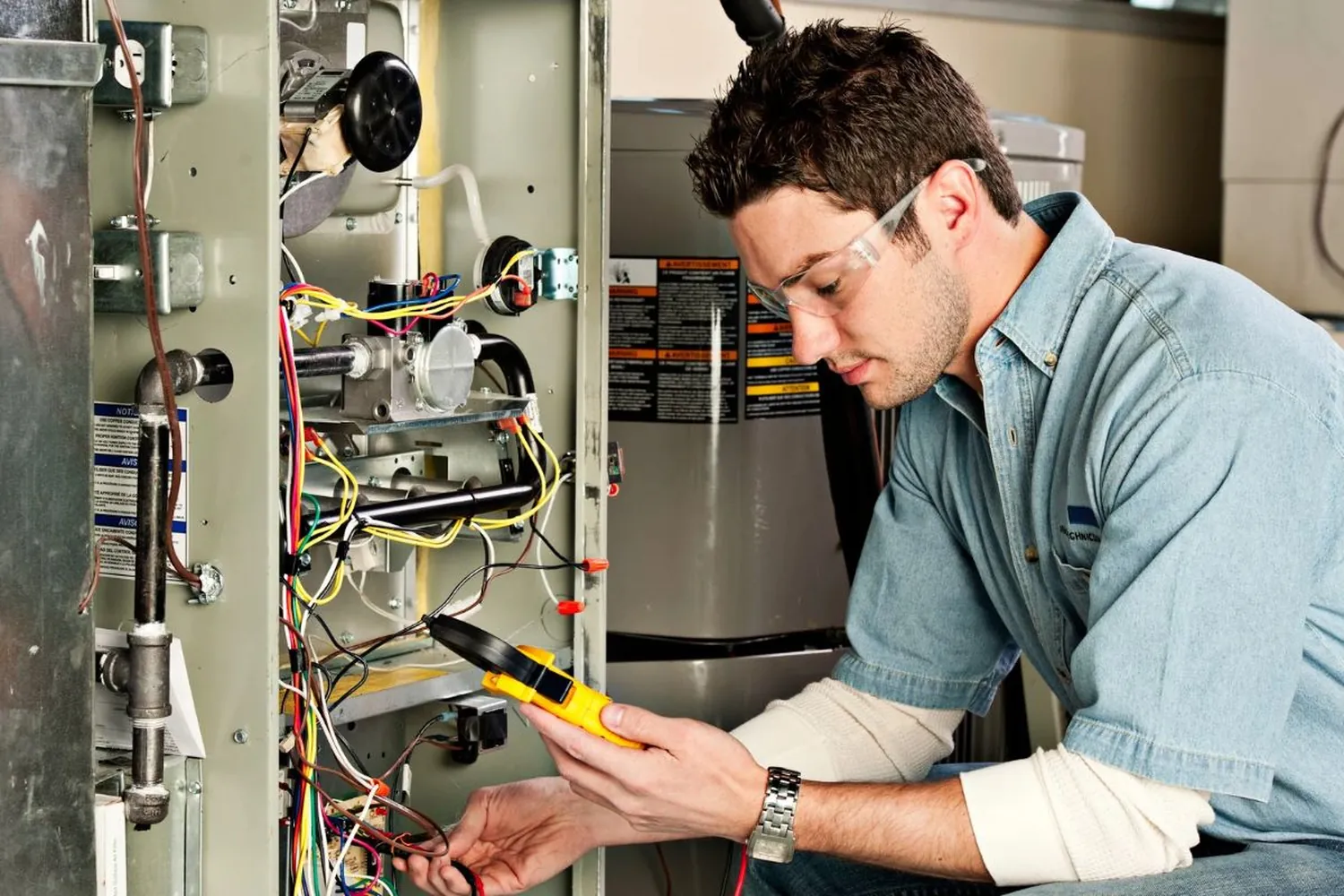
Furnace service starts with the homeowner’s report: furnace not working, weak heat, repeated cycling, unusual noises, or a thermostat that does not seem to respond. The provider can inspect the air filter, blower operation, accessible ductwork, and the controls that start a heating cycle. Replacing a dirty filter can improve airflow, but a complete diagnosis may be needed when the unit still does not heat.
To fix a furnace, the technician evaluates the equipment type and safety sequence before recommending a part or adjustment. Home furnace repair can include testing ignition, fuel or electrical components, temperature limits, and the distribution of heated air through the home. The provider should explain what was found and what repair is proposed.
A furnace tune-up or heating system maintenance visit can include an annual furnace inspection of accessible components and normal operating functions. The provider may discuss the system’s AFUE rating when efficiency or replacement is part of the conversation. They can also address combustion safety, including whether there are concerns requiring the homeowner to stop operating the system and seek appropriate help.
Furnace repair work in Honeyville
| Part | What it does | Signs it is failing |
|---|---|---|
| Thermostat | Signals the furnace to start and stop heating. | Incorrect temperature readings, no call for heat, or frequent cycling. |
| Air filter | Catches airborne dust before air moves through the furnace. | Weak airflow, a dirty filter surface, or frequent limit switch shutdowns. |
| Ignition system | Lights the burners during the heating cycle. | The furnace clicks or starts but does not produce heat. |
| Blower motor | Moves heated air through the ductwork. | Little airflow, unusual motor noise, or a blower that will not run. |
| Flame sensor | Confirms that burners have lit safely. | Burners light briefly and then shut off. |
Honeyville weather and heating upkeep
Honeyville experiences warm summers and cold northern Utah winters, with seasonal wind and winter storms affecting how long a home needs heat. Dust, pollen, and normal household debris can load an air filter and reduce airflow through a forced-air system. Checking filters during the heating season is practical maintenance, particularly in homes with pets, open windows, or nearby agricultural activity. The technician who comes out can assess the installed heating equipment and accessible air path.
Where we work in Honeyville
Also nearby: Collinston, Deweyville, Tremonton, Elwood, Brigham City.
Central Honeyville
Central residential streets include established homes where furnace location and duct layouts vary by era.
U.S. 91 corridor
Homes along the highway corridor may sit on larger lots with differing exposure and access conditions.
North Honeyville
North-side properties can include rural residential lots where outdoor drainage and wind exposure matter.
South Honeyville
South Honeyville homes connect toward Deweyville and may have a mix of older and newer housing.
Honeyville furnace questions
Can drainage or water near a Honeyville crawl space contribute to heating trouble?
Moisture near a mechanical area can affect access, insulation, duct condition, and some equipment components. A heating provider can inspect the accessible furnace area and explain what is visible, while a drainage issue may need separate evaluation.
How should a Honeyville landlord handle a furnace concern in a rental or multi-unit property?
The person requesting service should be able to provide access, identify the affected unit, and authorize any proposed work. It is useful to note whether one unit or several spaces are affected, because that can help distinguish a unit-level issue from a shared-system concern.
Do Honeyville dust, tree pollen, and nearby agricultural conditions make filter changes more important?
They can increase the material captured by the filter, particularly during windy periods and when windows are open. Check the filter at regular intervals and use the filter type specified for the equipment. A provider can assess whether restricted airflow is contributing to the reported problem.
Which furnace warning signs in a Honeyville home mean the system should be shut off?
Shut the furnace off if there is smoke, an active fire concern, a strong gas odor, or a carbon monoxide alarm. Leave the area and contact the appropriate emergency authority or utility when there is an immediate hazard. Do not operate the equipment again until the situation has been addressed.
What details should I give when calling about a Honeyville furnace that will not heat?
Describe the fuel type if known, thermostat display, sounds or lights on the unit, when the problem began, and whether air is moving from registers. Also mention recent outages, filter changes, water near the equipment, and the furnace location. Those details help an independent provider prepare for the visit.
Need furnace repair in Honeyville?
Tell us your town and what is happening.