Furnace repair in Gunnison, UT
Find an independent provider for furnace concerns in Gunnison.
Furnace Repair
TownGunnison, UT
CountySanpete
ZIP84634
Heating service considerations in Gunnison
Gunnison sits in the Sanpete Valley on U.S. Route 89, with Utah State Route 137 linking the town west toward I-15. Furnace repair is a practical concern in this central Utah community because winters are cold and homes are spread across both established blocks and larger residential lots. The San Pitch River runs through the valley east of town. Gunnison’s housing includes older homes, ranch-style properties, and newer construction.
Home age and building form
Older homes may have original layout constraints, later additions, or duct runs altered during remodeling. Single-level ranch houses can have long horizontal duct runs, while two-story homes need balanced supply and return air between floors. The provider can inspect accessible portions of the system serving the home.
Lots, slopes, and equipment placement
Larger lots may place exterior equipment, vent terminations, or fuel connections some distance from the main living area. On a sloped parcel, snowmelt and grading can affect access around exterior components. Equipment clearances must be maintained according to the manufacturer’s instructions.
Trees, leaves, and pollen
Trees and seasonal pollen can add debris around exterior heating and ventilation components. Leaves should not be allowed to block combustion-air openings or vent terminations. Indoor filters also collect dust and pollen that move through the return-air system.
Snow and winter storms
Snow can drift around vent outlets, and ice can affect accessible exterior terminations. A provider can inspect venting and drainage associated with the specific equipment. Homeowners should not block or alter vents to solve a snow problem.
What a Gunnison furnace visit can include
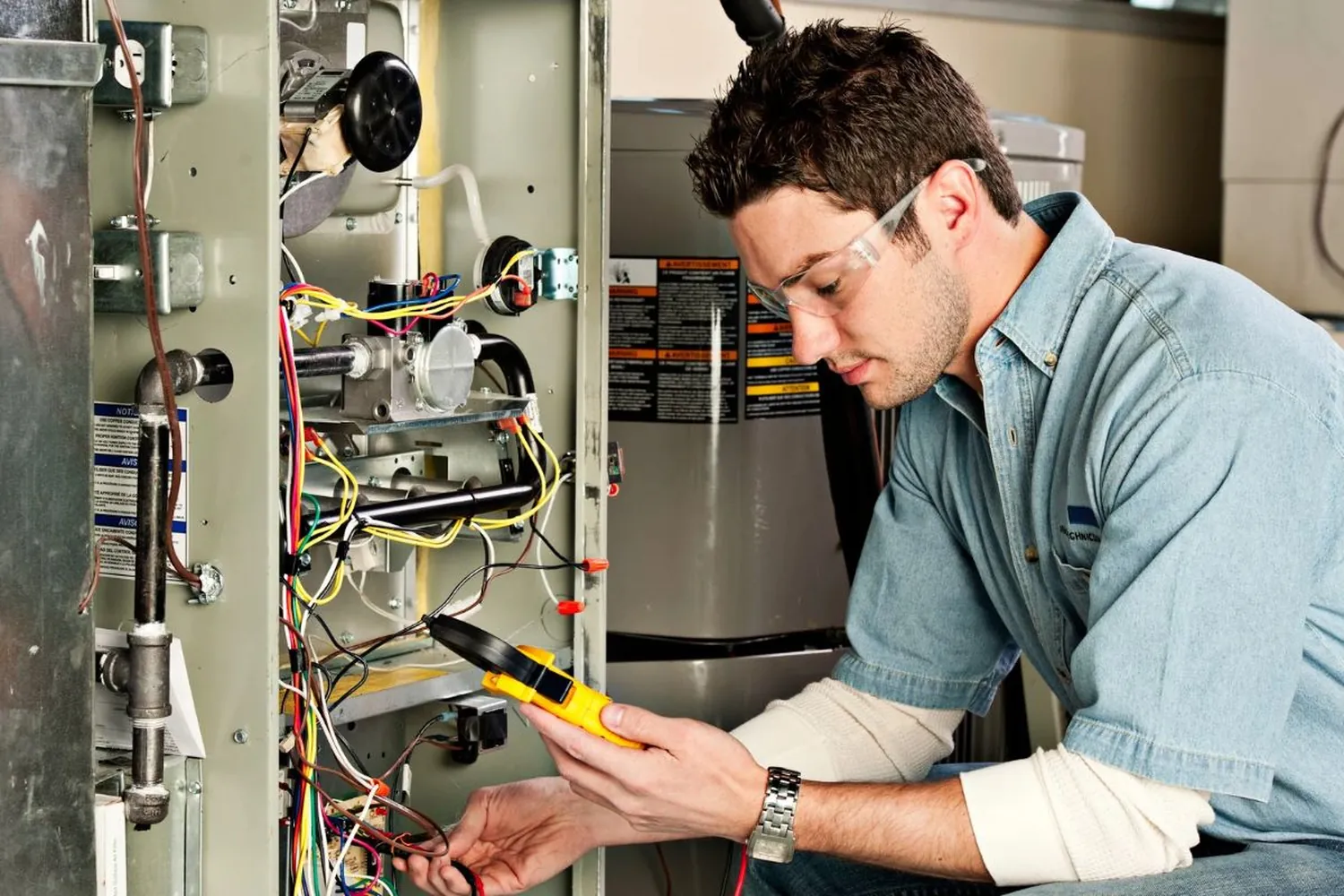
We connect you with independent providers in your area. During furnace troubleshooting, the provider generally verifies the thermostat call for heat, electrical supply, filter condition, and the sequence from startup through blower operation. This establishes whether the issue is in controls, ignition, fuel delivery, venting, or air movement.
A forced air furnace may be fueled by gas or electricity. On a gas furnace, a technician may inspect the natural gas line connection, burner assembly, ignition system, flame sensor, and venting; a gas connection should only be handled by a qualified provider. An electric furnace has different diagnostic points, including heating elements and electrical controls.
Furnace maintenance and repair can include heating system maintenance such as cleaning accessible components and scheduling an annual furnace inspection. A high efficiency furnace or condensing furnace may have condensate handling and sealed combustion components that require particular attention. A furnace repair service can explain the condition found and the work proposed; a furnace repair company or furnace technician should not guess at a fault without testing.
Furnace repair work in Gunnison
| Part | What it does | Signs it is failing |
|---|---|---|
| Thermostat | Signals the furnace to start and stop heating. | Incorrect temperature readings, no call for heat, or frequent cycling. |
| Air filter | Catches airborne dust before air moves through the furnace. | Weak airflow, a dirty filter surface, or frequent limit switch shutdowns. |
| Ignition system | Lights the burners during the heating cycle. | The furnace clicks or starts but does not produce heat. |
| Blower motor | Moves heated air through the ductwork. | Little airflow, unusual motor noise, or a blower that will not run. |
| Flame sensor | Confirms that burners have lit safely. | Burners light briefly and then shut off. |
Gunnison’s heating season and equipment efficiency
Cold winters in the Sanpete Valley place sustained demand on heating equipment. Rising utility use can come from a dirty filter, duct leakage, thermostat settings, building heat loss, or a mechanical problem, not solely from the furnace itself. The AFUE rating describes a furnace’s rated fuel efficiency, but it does not replace proper installation, airflow, and maintenance. Snow around vents and normal seasonal debris should be checked before the heating season and after major storms.
Downtown Gunnison
Established blocks near the center of town include older homes where equipment and ducts may have been updated at different times.
North Gunnison
North-side homes may have open-lot exposure that makes drafts and duct imbalance more noticeable.
South Gunnison
South Gunnison includes residential properties where larger lots can affect access to exterior venting or equipment.
East Gunnison
Homes toward the Sanpete Valley side of town can have drainage and snowmelt conditions worth noting when describing access.
Gunnison furnace questions
What should Gunnison homeowners do after a winter outage or storm leaves the furnace off?
Check that power has returned, the breaker is on, and the thermostat is calling for heat. If the system does not restart, do not repeatedly cycle the breaker or bypass any switch. Tell the provider whether the problem began during the outage and whether any error lights are visible.
Why might heating costs rise in a Gunnison home even if the furnace still runs?
A higher bill can reflect a loaded filter, reduced blower performance, duct leakage, long run times during cold weather, or heat loss through the building. A provider can evaluate furnace operation and accessible airflow issues. The condition of insulation, windows, and doors may require separate evaluation.
When is a sensible time for routine heating system maintenance in Gunnison?
Scheduling before the main cold-weather demand allows a provider to inspect operation before the furnace is relied on daily. An annual furnace inspection can include the filter, burners or elements, controls, venting, and blower operation as appropriate. The provider can recommend timing based on the equipment type and use.
What happens step by step during a furnace visit to a Gunnison house?
The technician typically begins by asking about symptoms and checking thermostat settings, power, and filter condition. They then test the operating sequence and inspect relevant components such as the blower, safety switches, ignition system, burner assembly, or electrical elements. After diagnosis, the provider should explain the fault and proposed work.
How long can a Gunnison furnace repair take when a part is needed?
The time depends on the diagnosed fault, equipment model, access, and whether the correct part is available. Some conditions can be addressed during diagnosis, while other work requires obtaining a specific component. The provider who assesses the unit can give the most accurate information for that job.
Need furnace repair in Gunnison?
Tell us your town and what is happening.