Furnace repair in Fillmore, UT
Connect with an independent provider for furnace problems in Fillmore homes.
Furnace Repair
TownFillmore, UT
CountyMillard
ZIP84631
Furnace care for Fillmore homes along I-15 and US-50
Furnace repair in Fillmore matters for homes in a town where I-15 and US-50 provide the principal road connections through central Utah. Fillmore is the Millard County seat, set between the Pahvant Range and the Sevier Desert. The community includes the historic core around Main Street as well as later single-family development around the town edges. Furnace Repair Utah is an advertising and referral service owned by Patrick Cramer, and we connect callers with independent local providers.
Older houses and later construction
Fillmore has older homes near its central streets, including houses that have been updated over many decades. A provider may need to account for older duct runs, additions, replacement windows, and equipment installed after the original construction.
Lots, slopes, and equipment locations
Many properties have larger lots than those in denser Wasatch Front communities. Equipment may be placed in a garage, utility room, crawl space, or an exterior location, and the technician who comes out needs clear access to the furnace and venting.
Leaves and seasonal debris
Mature trees around established Fillmore blocks can add leaves, seed material, and pollen to outdoor areas and return-air pathways. An air filter and the area around intake and exhaust terminations are worth checking as part of a heating concern.
Snow and winter storms
Winter storms can bring snow, wind, and prolonged cold to the Fillmore area. Snow should not block combustion-air or exhaust openings, and a provider can inspect venting when a furnace shuts down during severe weather.
How furnace repair works in Fillmore houses
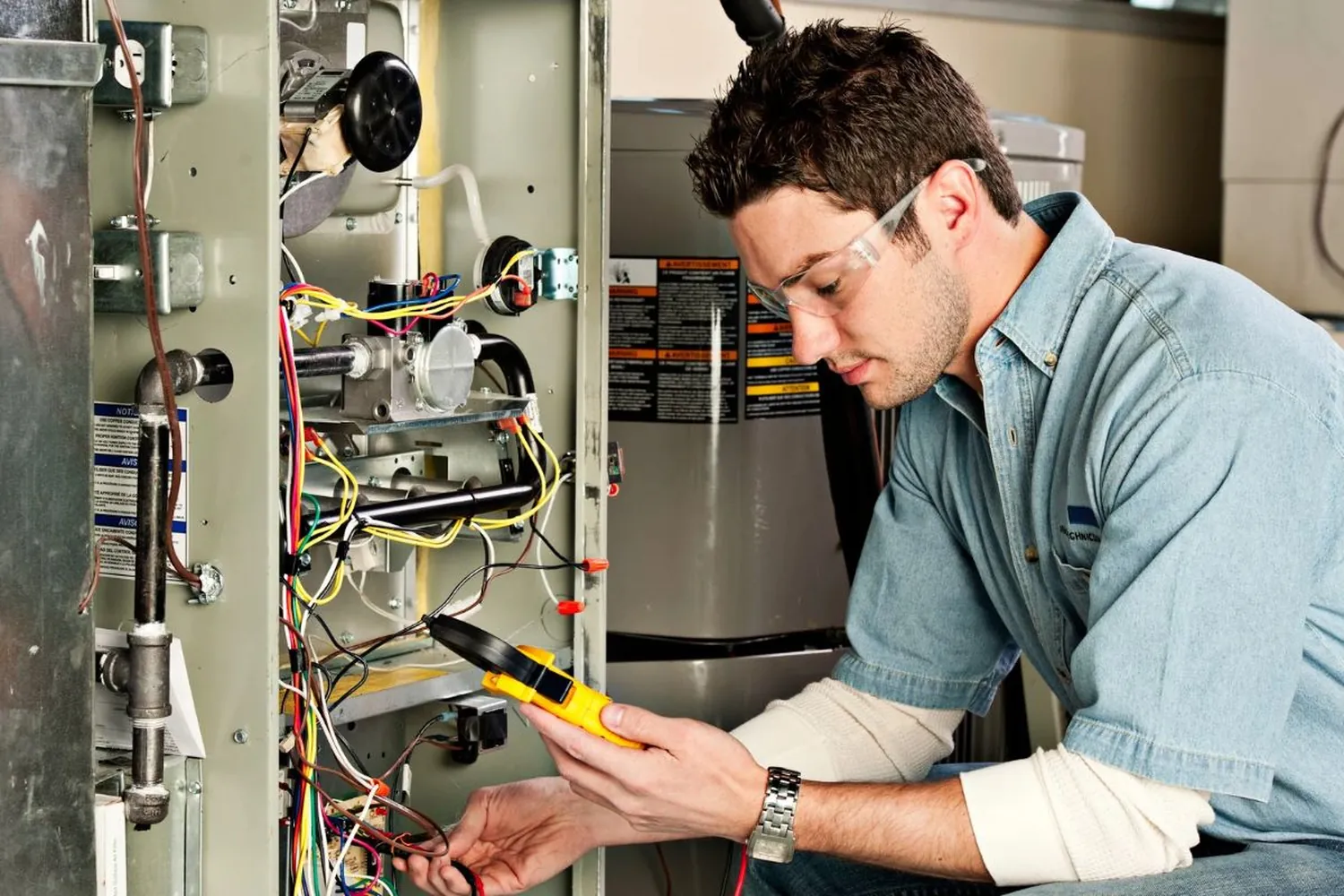
Residential furnace repair starts with the reported symptom and a basic safety review. The local provider may inspect the thermostat, electrical supply, air filter, and furnace sequence of operation before testing individual components. A dirty filter, restricted return air, or a blower wheel coated with dust can reduce circulation and make rooms feel cooler.
For gas furnace repair, the technician may examine the natural gas line connection, burner assembly, igniter, flame sensor, inducer motor, and gas controls. Older systems may use a pilot light, while many newer units use electronic ignition. The heat exchanger and venting require careful inspection because combustion gases must remain separated from household air.
Electric furnace repair follows a different diagnostic path, focused on heating elements, relays, wiring, blower operation, and control settings. Heating furnace repair can also involve a blower motor that runs intermittently or an airflow problem caused by duct leakage or a blocked filter. During furnace troubleshooting, the provider should explain the fault found and the work proposed before proceeding.
Furnace repair work in Fillmore
| Part | What it does | Signs it is failing |
|---|---|---|
| Thermostat | Signals the furnace to start and stop heating. | Incorrect temperature readings, no call for heat, or frequent cycling. |
| Air filter | Catches airborne dust before air moves through the furnace. | Weak airflow, a dirty filter surface, or frequent limit switch shutdowns. |
| Ignition system | Lights the burners during the heating cycle. | The furnace clicks or starts but does not produce heat. |
| Blower motor | Moves heated air through the ductwork. | Little airflow, unusual motor noise, or a blower that will not run. |
| Flame sensor | Confirms that burners have lit safely. | Burners light briefly and then shut off. |
Cold-weather heating in Fillmore
Fillmore’s high-desert setting brings large temperature swings and a heating season that can extend well beyond a short winter cold snap. Wind can increase heat loss at doors, windows, and gaps around additions. Snow and freezing temperatures can expose venting, ignition, and condensate-drain issues on applicable high-efficiency equipment. Seasonal checks before sustained cold weather can help identify restricted filters and weak ignition components.
Downtown Fillmore
Older homes around Main Street may have remodels and duct alterations from different periods.
North Fillmore
Homes on the north side can have exposed lots where winter wind affects heat loss.
South Fillmore
South-side properties include detached homes where furnace access may be through garages or utility areas.
East Fillmore
Homes toward the foothill side may have more open exposure than central blocks.
Fillmore furnace questions
Which ZIP code and parts of Fillmore can be matched with a furnace provider?
We can take requests for the 84631 ZIP code, including homes around downtown Fillmore, Main Street, and the north, south, east, and west sections of town. Availability is determined by independent providers serving the area. Tell us the property location and the furnace symptom when you call.
How do Fillmore’s older and historic houses change a furnace diagnosis?
Older houses may have later additions, altered ductwork, nonstandard return-air paths, or furnaces located in tight utility spaces. A provider can assess the actual equipment, venting route, and accessible ducts instead of assuming the heating layout matches the original home. Updates to insulation and windows can also change how a system performs room to room.
What should owners of newer Fillmore subdivisions, townhouses, or condos expect for heating work?
Newer homes may have sealed-combustion equipment, programmable controls, zoned ducts, or high-efficiency vent piping. In attached housing, access rules and responsibility for shared elements may be set by the property owner or association. The provider can diagnose the furnace serving the individual home and explain whether another building party needs to be involved.
How can Fillmore’s harshest winter weather affect a furnace?
The coldest periods can make a marginal igniter, restricted intake, or weak blower more noticeable because the system runs longer. Wind-driven snow can also affect exposed vent terminations. If there is a gas odor, soot, a carbon monoxide alarm, or unusual combustion behavior, turn the system off when safe to do so and seek appropriate help.
When does repairing an aging furnace make sense in a Fillmore home versus replacing it?
The decision depends on the diagnosed failure, condition of the heat exchanger, repair scope, efficiency, parts availability, and the home’s heating needs. A provider can compare the condition of the existing unit with replacement options without assuming that age alone decides the issue. Ask for a clear description of the failed part and any related safety concerns.
Need furnace repair in Fillmore?
Tell us your town and what is happening.