Furnace repair in Bluff, UT
Get connected with an independent provider for home heating concerns in Bluff.
Furnace Repair
TownBluff, UT
CountySan Juan
ZIP84512
Heating diagnostics for Bluff’s dry, high-desert conditions
Bluff is known for its dry high-desert weather, sunny conditions, wind, and large shifts between daytime and nighttime temperatures. Furnace repair in Bluff can be important when a heating system must handle cold nights in a small community near the San Juan River and U.S. Highway 163. Homes range from older residences to newer construction on spacious lots, often with open exposure to dust and wind. We connect callers with independent local providers; the provider who comes out performs the diagnosis and work.
Housing styles and equipment history
Bluff includes older homes as well as newer residences built for the desert setting. Construction changes and additions can affect duct paths, thermostat locations, and heating equipment access.
Lots, grades, and exterior units
Many properties have open lots and varied grades. If a home uses a heat pump with the heating system, its outdoor unit needs stable placement, clearance, and drainage away from runoff.
Dust, trees, and pollen
Desert dust can collect on exterior equipment and in filters, while landscape trees and seasonal pollen add debris. Keeping return grilles and outdoor clearances clean supports airflow.
Snow and winter cold
Bluff is generally dry, but winter cold and occasional snow can still affect vent terminations and heating demand. Exterior exhaust and intake openings should remain unobstructed.
How a provider approaches Bluff home furnace problems
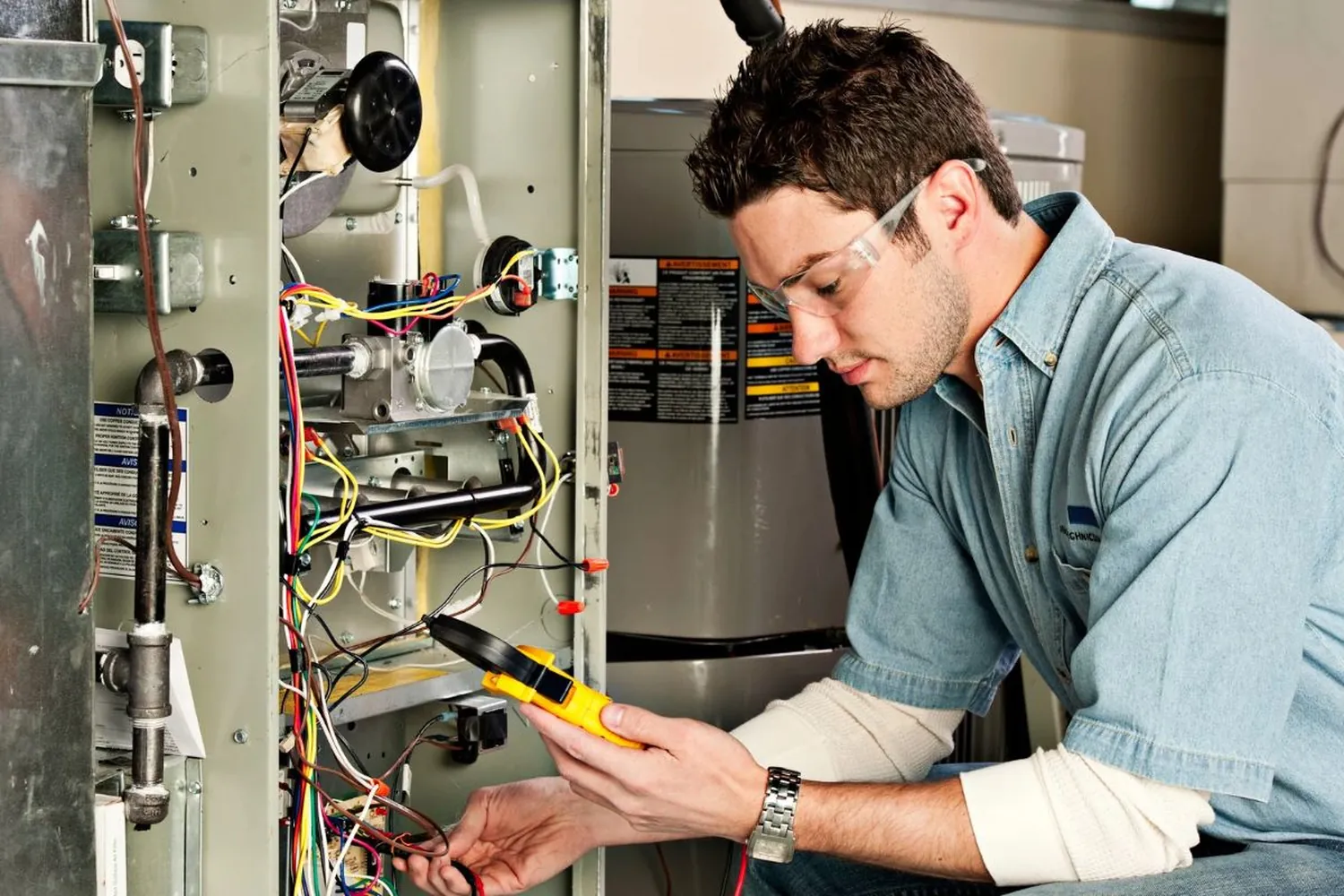
A forced air furnace moves heated air through ductwork, returns, and supply registers. For home furnace repair, the provider can check furnace filter replacement needs, blower operation, thermostat response, and the condition of accessible ducts. Poor airflow may feel like a furnace issue even when a restriction or duct fault is contributing.
For gas furnace repair, the technician evaluates ignition, fuel delivery, venting, and safety controls. Combustion safety matters because a damaged or improperly vented system can create carbon monoxide risk. Do not use a furnace if you suspect a gas leak, smell combustion products indoors, or a carbon monoxide alarm sounds; leave the building and contact emergency services or the gas utility as appropriate.
We connect homeowners seeking residential furnace repair, help to fix a furnace, or an evaluation when the furnace is not working. A provider can perform a furnace tune-up, heating system maintenance, or an annual furnace inspection as appropriate to the system and reported condition. The provider can also explain how the unit’s afue rating relates to efficiency.
Furnace repair work in Bluff
| Part | What it does | Signs it is failing |
|---|---|---|
| Thermostat | Signals the furnace to start and stop heating. | Incorrect temperature readings, no call for heat, or frequent cycling. |
| Air filter | Catches airborne dust before air moves through the furnace. | Weak airflow, a dirty filter surface, or frequent limit switch shutdowns. |
| Ignition system | Lights the burners during the heating cycle. | The furnace clicks or starts but does not produce heat. |
| Blower motor | Moves heated air through the ductwork. | Little airflow, unusual motor noise, or a blower that will not run. |
| Flame sensor | Confirms that burners have lit safely. | Burners light briefly and then shut off. |
Bluff weather and annual heating care
Bluff’s arid climate and wind can increase dust exposure around homes and mechanical equipment. Cold nights create heating demand even after mild daytime temperatures. Filters may need attention when dust restricts air movement, and exposed venting should be checked after wind events. Winter precipitation is less frequent than in mountain towns, but any snow accumulation must be kept away from vents.
Where we work in Bluff
Also nearby: Blanding, Mexican Hat, Montezuma Creek, Hatch Trading Post, Monticello.
Central Bluff
Central Bluff homes include established residences where equipment locations and duct layouts vary by age and renovation history.
U.S. 163 corridor
Homes near the highway corridor may have greater exposure to windblown dust and road access considerations.
San Juan River area
Properties nearer the river corridor can have site drainage and access conditions that differ from open mesa lots.
West Bluff
West-side lots can be open to prevailing wind and benefit from clear exterior equipment surroundings.
Bluff furnace questions
How can drainage near the San Juan River corridor affect a Bluff home’s heating equipment?
Water should drain away from foundations, crawl spaces, and exterior mechanical pads. If moisture reaches electrical components, condensate drains, or low equipment areas, tell the provider what you observed and where it occurred.
What should a Bluff landlord or tenant do about a furnace problem in a rental or multi-family building?
The tenant should report the symptom to the owner or property manager and follow the lease’s maintenance process. The person who can authorize work should coordinate access and give the provider details about the unit and any shared equipment areas.
Can Bluff’s wind, dust, cottonwoods, or seasonal pollen contribute to heating trouble?
Dust and pollen can load an air filter and reduce airflow, while leaves can gather around exterior components or vent openings. A provider can determine whether restricted airflow is contributing to the reported problem.
Which warning signs in a Bluff home mean the heating system should be shut off?
Turn the system off and leave the building if you smell gas, a carbon monoxide alarm sounds, or occupants develop symptoms that may be related to carbon monoxide exposure. Contact emergency services or the gas utility as appropriate, and do not restart the equipment until it has been assessed.
How can a Bluff homeowner describe a heating issue clearly when calling for a referral?
State whether the unit will not start, starts and stops, blows cool air, makes a noise, or heats only part of the house. Include the equipment location, thermostat setting, any error display, filter condition, and whether the problem began after wind, a power interruption, or a temperature change.
Need furnace repair in Bluff?
Tell us your town and what is happening.